new

Get trending papers in your email inbox!

Subscribe

Daily Papers

byAK and the research community

Dec 8

Reformulating Vision-Language Foundation Models and Datasets Towards Universal Multimodal Assistants

Recent Multimodal Large Language Models (MLLMs) exhibit impressive abilities to perceive images and follow open-ended instructions. The capabilities of MLLMs depend on two crucial factors: the model architecture to facilitate the feature alignment of visual modules and large language models; the multimodal instruction tuning datasets for human instruction following. (i) For the model architecture, most existing models introduce an external bridge module to connect vision encoders with language models, which needs an additional feature-alignment pre-training. In this work, we discover that compact pre-trained vision language models can inherently serve as ``out-of-the-box'' bridges between vision and language. Based on this, we propose Muffin framework, which directly employs pre-trained vision-language models to act as providers of visual signals. (ii) For the multimodal instruction tuning datasets, existing methods omit the complementary relationship between different datasets and simply mix datasets from different tasks. Instead, we propose UniMM-Chat dataset which explores the complementarities of datasets to generate 1.1M high-quality and diverse multimodal instructions. We merge information describing the same image from diverse datasets and transforms it into more knowledge-intensive conversation data. Experimental results demonstrate the effectiveness of the Muffin framework and UniMM-Chat dataset. Muffin achieves state-of-the-art performance on a wide range of vision-language tasks, significantly surpassing state-of-the-art models like LLaVA and InstructBLIP. Our model and dataset are all accessible at https://github.com/thunlp/muffin.


  • 13 authors
·
Oct 1, 2023

Enhancing Chat Language Models by Scaling High-quality Instructional Conversations

Fine-tuning on instruction data has been widely validated as an effective practice for implementing chat language models like ChatGPT. Scaling the diversity and quality of such data, although straightforward, stands a great chance of leading to improved performance. This paper aims to improve the upper bound of open-source models further. We first provide a systematically designed, diverse, informative, large-scale dataset of instructional conversations, UltraChat, which does not involve human queries. Our objective is to capture the breadth of interactions that a human might have with an AI assistant and employs a comprehensive framework to generate multi-turn conversation iteratively. UltraChat contains 1.5 million high-quality multi-turn dialogues and covers a wide range of topics and instructions. Our statistical analysis of UltraChat reveals its superiority in various key metrics, including scale, average length, diversity, coherence, etc., solidifying its position as a leading open-source dataset. Building upon UltraChat, we fine-tune a LLaMA model to create a powerful conversational model, UltraLLaMA. Our evaluations indicate that UltraLLaMA consistently outperforms other open-source models, including Vicuna, the previously recognized state-of-the-art open-source model. The dataset and the model will be publicly released\url{https://github.com/thunlp/UltraChat}.

  • 9 authors
·
May 23, 2023 4

EmotionTalk: An Interactive Chinese Multimodal Emotion Dataset With Rich Annotations

In recent years, emotion recognition plays a critical role in applications such as human-computer interaction, mental health monitoring, and sentiment analysis. While datasets for emotion analysis in languages such as English have proliferated, there remains a pressing need for high-quality, comprehensive datasets tailored to the unique linguistic, cultural, and multimodal characteristics of Chinese. In this work, we propose EmotionTalk, an interactive Chinese multimodal emotion dataset with rich annotations. This dataset provides multimodal information from 19 actors participating in dyadic conversational settings, incorporating acoustic, visual, and textual modalities. It includes 23.6 hours of speech (19,250 utterances), annotations for 7 utterance-level emotion categories (happy, surprise, sad, disgust, anger, fear, and neutral), 5-dimensional sentiment labels (negative, weakly negative, neutral, weakly positive, and positive) and 4-dimensional speech captions (speaker, speaking style, emotion and overall). The dataset is well-suited for research on unimodal and multimodal emotion recognition, missing modality challenges, and speech captioning tasks. To our knowledge, it represents the first high-quality and versatile Chinese dialogue multimodal emotion dataset, which is a valuable contribution to research on cross-cultural emotion analysis and recognition. Additionally, we conduct experiments on EmotionTalk to demonstrate the effectiveness and quality of the dataset. It will be open-source and freely available for all academic purposes. The dataset and codes will be made available at: https://github.com/NKU-HLT/EmotionTalk.

  • 12 authors
·
May 28

A 106K Multi-Topic Multilingual Conversational User Dataset with Emoticons

Instant messaging has become a predominant form of communication, with texts and emoticons enabling users to express emotions and ideas efficiently. Emoticons, in particular, have gained significant traction as a medium for conveying sentiments and information, leading to the growing importance of emoticon retrieval and recommendation systems. However, one of the key challenges in this area has been the absence of datasets that capture both the temporal dynamics and user-specific interactions with emoticons, limiting the progress of personalized user modeling and recommendation approaches. To address this, we introduce the emoticon dataset, a comprehensive resource that includes time-based data along with anonymous user identifiers across different conversations. As the largest publicly accessible emoticon dataset to date, it comprises 22K unique users, 370K emoticons, and 8.3M messages. The data was collected from a widely-used messaging platform across 67 conversations and 720 hours of crawling. Strict privacy and safety checks were applied to ensure the integrity of both text and image data. Spanning across 10 distinct domains, the emoticon dataset provides rich insights into temporal, multilingual, and cross-domain behaviors, which were previously unavailable in other emoticon-based datasets. Our in-depth experiments, both quantitative and qualitative, demonstrate the dataset's potential in modeling user behavior and personalized recommendation systems, opening up new possibilities for research in personalized retrieval and conversational AI. The dataset is freely accessible.

  • 6 authors
·
Feb 26

Large Language Model as a User Simulator

The unparalleled performance of closed-sourced ChatGPT has sparked efforts towards its democratization, with notable strides made by leveraging real user and ChatGPT conversations, as evidenced by Vicuna. However, while current endeavors like Baize and UltraChat aim to auto-generate conversational data due to challenges in gathering human participation, they primarily rely on ChatGPT to simulate human behaviors based on directives rather than genuine human learning. This results in a limited scope, diminished diversity, and an absence of genuine multi-round conversational dynamics. To address the above issues, we innovatively target human questions extracted from genuine human-machine conversations as a learning goal and train a user simulator, UserGPT, to produce a high-quality human-centric synthetic conversation dataset, RealChat. Subsequently, this dataset trains our assistant model, ReaLM. Experimentally, ReaLM outpaces baseline models in both Vicuna-Bench and MT-Bench by pairwise comparison when considering equivalent training set sizes, and manual evaluation also shows that our model is highly competitive. Impressively, when fine-tuned with the latest LLaMA 2 model, ReaLM secured a leading score of 6.33 in the MT-Bench, outshining the contemporary same-scale models, including the LLaMA-2-7B-chat model. Further in-depth analysis demonstrates the scalability and transferability of our approach. A preliminary exploration into the interplay between training set data quality and resultant model performance is also undertaken, laying a robust groundwork for future investigations. The code is available at https://github.com/FreedomIntelligence/ReaLM.

  • 5 authors
·
Aug 21, 2023

Datasets for Large Language Models: A Comprehensive Survey

This paper embarks on an exploration into the Large Language Model (LLM) datasets, which play a crucial role in the remarkable advancements of LLMs. The datasets serve as the foundational infrastructure analogous to a root system that sustains and nurtures the development of LLMs. Consequently, examination of these datasets emerges as a critical topic in research. In order to address the current lack of a comprehensive overview and thorough analysis of LLM datasets, and to gain insights into their current status and future trends, this survey consolidates and categorizes the fundamental aspects of LLM datasets from five perspectives: (1) Pre-training Corpora; (2) Instruction Fine-tuning Datasets; (3) Preference Datasets; (4) Evaluation Datasets; (5) Traditional Natural Language Processing (NLP) Datasets. The survey sheds light on the prevailing challenges and points out potential avenues for future investigation. Additionally, a comprehensive review of the existing available dataset resources is also provided, including statistics from 444 datasets, covering 8 language categories and spanning 32 domains. Information from 20 dimensions is incorporated into the dataset statistics. The total data size surveyed surpasses 774.5 TB for pre-training corpora and 700M instances for other datasets. We aim to present the entire landscape of LLM text datasets, serving as a comprehensive reference for researchers in this field and contributing to future studies. Related resources are available at: https://github.com/lmmlzn/Awesome-LLMs-Datasets.

  • 5 authors
·
Feb 27, 2024 1

UniMS-RAG: A Unified Multi-source Retrieval-Augmented Generation for Personalized Dialogue Systems

Large Language Models (LLMs) has shown exceptional capabilities in many natual language understanding and generation tasks. However, the personalization issue still remains a much-coveted property, especially when it comes to the multiple sources involved in the dialogue system. To better plan and incorporate the use of multiple sources in generating personalized response, we firstly decompose it into three sub-tasks: Knowledge Source Selection, Knowledge Retrieval, and Response Generation. We then propose a novel Unified Multi-Source Retrieval-Augmented Generation system (UniMS-RAG) Specifically, we unify these three sub-tasks with different formulations into the same sequence-to-sequence paradigm during the training, to adaptively retrieve evidences and evaluate the relevance on-demand using special tokens, called acting tokens and evaluation tokens. Enabling language models to generate acting tokens facilitates interaction with various knowledge sources, allowing them to adapt their behavior to diverse task requirements. Meanwhile, evaluation tokens gauge the relevance score between the dialogue context and the retrieved evidence. In addition, we carefully design a self-refinement mechanism to iteratively refine the generated response considering 1) the consistency scores between the generated response and retrieved evidence; and 2) the relevance scores. Experiments on two personalized datasets (DuLeMon and KBP) show that UniMS-RAG achieves state-of-the-art performance on the knowledge source selection and response generation task with itself as a retriever in a unified manner. Extensive analyses and discussions are provided for shedding some new perspectives for personalized dialogue systems.

  • 9 authors
·
Jan 24, 2024

Chat-UniVi: Unified Visual Representation Empowers Large Language Models with Image and Video Understanding

Large language models have demonstrated impressive universal capabilities across a wide range of open-ended tasks and have extended their utility to encompass multimodal conversations. However, existing methods encounter challenges in effectively handling both image and video understanding, particularly with limited visual tokens. In this work, we introduce Chat-UniVi, a unified vision-language model capable of comprehending and engaging in conversations involving images and videos through a unified visual representation. Specifically, we employ a set of dynamic visual tokens to uniformly represent images and videos. This representation framework empowers the model to efficiently utilize a limited number of visual tokens to simultaneously capture the spatial details necessary for images and the comprehensive temporal relationship required for videos. Moreover, we leverage a multi-scale representation, enabling the model to perceive both high-level semantic concepts and low-level visual details. Notably, Chat-UniVi is trained on a mixed dataset containing both images and videos, allowing direct application to tasks involving both mediums without requiring any modifications. Extensive experimental results demonstrate that Chat-UniVi, as a unified model, consistently outperforms even existing methods exclusively designed for either images or videos.

  • 5 authors
·
Nov 14, 2023 1

UniMed-CLIP: Towards a Unified Image-Text Pretraining Paradigm for Diverse Medical Imaging Modalities

Vision-Language Models (VLMs) trained via contrastive learning have achieved notable success in natural image tasks. However, their application in the medical domain remains limited due to the scarcity of openly accessible, large-scale medical image-text datasets. Existing medical VLMs either train on closed-source proprietary or relatively small open-source datasets that do not generalize well. Similarly, most models remain specific to a single or limited number of medical imaging domains, again restricting their applicability to other modalities. To address this gap, we introduce UniMed, a large-scale, open-source multi-modal medical dataset comprising over 5.3 million image-text pairs across six diverse imaging modalities: X-ray, CT, MRI, Ultrasound, Pathology, and Fundus. UniMed is developed using a data-collection framework that leverages Large Language Models (LLMs) to transform modality-specific classification datasets into image-text formats while incorporating existing image-text data from the medical domain, facilitating scalable VLM pretraining. Using UniMed, we trained UniMed-CLIP, a unified VLM for six modalities that significantly outperforms existing generalist VLMs and matches modality-specific medical VLMs, achieving notable gains in zero-shot evaluations. For instance, UniMed-CLIP improves over BiomedCLIP (trained on proprietary data) by an absolute gain of +12.61, averaged over 21 datasets, while using 3x less training data. To facilitate future research, we release UniMed dataset, training codes, and models at https://github.com/mbzuai-oryx/UniMed-CLIP.

  • 5 authors
·
Dec 13, 2024

Vocabulary Expansion of Chat Models with Unlabeled Target Language Data

Chat models (i.e. language models trained to follow instructions through conversation with humans) outperform base models (i.e. trained solely on unlabeled data) in both conversation and general task-solving abilities. These models are generally English-centric and require further adaptation for languages that are underrepresented in or absent from their training data. A common technique for adapting base models is to extend the model's vocabulary with target language tokens, i.e. vocabulary expansion (VE), and then continually pre-train it on language-specific data. Using chat data is ideal for chat model adaptation, but often, either this does not exist or is costly to construct. Alternatively, adapting chat models with unlabeled data is a possible solution, but it could result in catastrophic forgetting. In this paper, we investigate the impact of using unlabeled target language data for VE on chat models for the first time. We first show that off-the-shelf VE generally performs well across target language tasks and models in 71% of cases, though it underperforms in scenarios where source chat models are already strong. To further improve adapted models, we propose post-hoc techniques that inject information from the source model without requiring any further training. Experiments reveal the effectiveness of our methods, helping the adapted models to achieve performance improvements in 87% of cases.

  • 4 authors
·
Dec 16, 2024

ChatGLM: A Family of Large Language Models from GLM-130B to GLM-4 All Tools

We introduce ChatGLM, an evolving family of large language models that we have been developing over time. This report primarily focuses on the GLM-4 language series, which includes GLM-4, GLM-4-Air, and GLM-4-9B. They represent our most capable models that are trained with all the insights and lessons gained from the preceding three generations of ChatGLM. To date, the GLM-4 models are pre-trained on ten trillions of tokens mostly in Chinese and English, along with a small set of corpus from 24 languages, and aligned primarily for Chinese and English usage. The high-quality alignment is achieved via a multi-stage post-training process, which involves supervised fine-tuning and learning from human feedback. Evaluations show that GLM-4 1) closely rivals or outperforms GPT-4 in terms of general metrics such as MMLU, GSM8K, MATH, BBH, GPQA, and HumanEval, 2) gets close to GPT-4-Turbo in instruction following as measured by IFEval, 3) matches GPT-4 Turbo (128K) and Claude 3 for long context tasks, and 4) outperforms GPT-4 in Chinese alignments as measured by AlignBench. The GLM-4 All Tools model is further aligned to understand user intent and autonomously decide when and which tool(s) touse -- including web browser, Python interpreter, text-to-image model, and user-defined functions -- to effectively complete complex tasks. In practical applications, it matches and even surpasses GPT-4 All Tools in tasks like accessing online information via web browsing and solving math problems using Python interpreter. Over the course, we have open-sourced a series of models, including ChatGLM-6B (three generations), GLM-4-9B (128K, 1M), GLM-4V-9B, WebGLM, and CodeGeeX, attracting over 10 million downloads on Hugging face in the year 2023 alone. The open models can be accessed through https://github.com/THUDM and https://huggingface.co/THUDM.

  • 56 authors
·
Jun 18, 2024 2

Investigating Annotator Bias in Large Language Models for Hate Speech Detection

Data annotation, the practice of assigning descriptive labels to raw data, is pivotal in optimizing the performance of machine learning models. However, it is a resource-intensive process susceptible to biases introduced by annotators. The emergence of sophisticated Large Language Models (LLMs), like ChatGPT presents a unique opportunity to modernize and streamline this complex procedure. While existing research extensively evaluates the efficacy of LLMs, as annotators, this paper delves into the biases present in LLMs, specifically GPT 3.5 and GPT 4o when annotating hate speech data. Our research contributes to understanding biases in four key categories: gender, race, religion, and disability. Specifically targeting highly vulnerable groups within these categories, we analyze annotator biases. Furthermore, we conduct a comprehensive examination of potential factors contributing to these biases by scrutinizing the annotated data. We introduce our custom hate speech detection dataset, HateSpeechCorpus, to conduct this research. Additionally, we perform the same experiments on the ETHOS (Mollas et al., 2022) dataset also for comparative analysis. This paper serves as a crucial resource, guiding researchers and practitioners in harnessing the potential of LLMs for dataannotation, thereby fostering advancements in this critical field. The HateSpeechCorpus dataset is available here: https://github.com/AmitDasRup123/HateSpeechCorpus

  • 10 authors
·
Jun 16, 2024

OffensiveLang: A Community Based Implicit Offensive Language Dataset

The widespread presence of hateful languages on social media has resulted in adverse effects on societal well-being. As a result, addressing this issue with high priority has become very important. Hate speech or offensive languages exist in both explicit and implicit forms, with the latter being more challenging to detect. Current research in this domain encounters several challenges. Firstly, the existing datasets primarily rely on the collection of texts containing explicit offensive keywords, making it challenging to capture implicitly offensive contents that are devoid of these keywords. Secondly, common methodologies tend to focus solely on textual analysis, neglecting the valuable insights that community information can provide. In this research paper, we introduce a novel dataset OffensiveLang, a community based implicit offensive language dataset generated by ChatGPT 3.5 containing data for 38 different target groups. Despite limitations in generating offensive texts using ChatGPT due to ethical constraints, we present a prompt-based approach that effectively generates implicit offensive languages. To ensure data quality, we evaluate the dataset with human. Additionally, we employ a prompt-based zero-shot method with ChatGPT and compare the detection results between human annotation and ChatGPT annotation. We utilize existing state-of-the-art models to see how effective they are in detecting such languages. The dataset is available here: https://github.com/AmitDasRup123/OffensiveLang

  • 13 authors
·
Mar 4, 2024

ReMeDi: Resources for Multi-domain, Multi-service, Medical Dialogues

Medical dialogue systems (MDSs) aim to assist doctors and patients with a range of professional medical services, i.e., diagnosis, treatment and consultation. The development of MDSs is hindered because of a lack of resources. In particular. (1) there is no dataset with large-scale medical dialogues that covers multiple medical services and contains fine-grained medical labels (i.e., intents, actions, slots, values), and (2) there is no set of established benchmarks for MDSs for multi-domain, multi-service medical dialogues. In this paper, we present ReMeDi, a set of resource for medical dialogues. ReMeDi consists of two parts, the ReMeDi dataset and the ReMeDi benchmarks. The ReMeDi dataset contains 96,965 conversations between doctors and patients, including 1,557 conversations with fine-gained labels. It covers 843 types of diseases, 5,228 medical entities, and 3 specialties of medical services across 40 domains. To the best of our knowledge, the ReMeDi dataset is the only medical dialogue dataset that covers multiple domains and services, and has fine-grained medical labels. The second part of the ReMeDi resources consists of a set of state-of-the-art models for (medical) dialogue generation. The ReMeDi benchmark has the following methods: (1) pretrained models (i.e., BERT-WWM, BERT-MED, GPT2, and MT5) trained, validated, and tested on the ReMeDi dataset, and (2) a self-supervised contrastive learning(SCL) method to expand the ReMeDi dataset and enhance the training of the state-of-the-art pretrained models. We describe the creation of the ReMeDi dataset, the ReMeDi benchmarking methods, and establish experimental results using the ReMeDi benchmarking methods on the ReMeDi dataset for future research to compare against. With this paper, we share the dataset, implementations of the benchmarks, and evaluation scripts.

  • 8 authors
·
Sep 1, 2021

Taskmaster-1: Toward a Realistic and Diverse Dialog Dataset

A significant barrier to progress in data-driven approaches to building dialog systems is the lack of high quality, goal-oriented conversational data. To help satisfy this elementary requirement, we introduce the initial release of the Taskmaster-1 dataset which includes 13,215 task-based dialogs comprising six domains. Two procedures were used to create this collection, each with unique advantages. The first involves a two-person, spoken "Wizard of Oz" (WOz) approach in which trained agents and crowdsourced workers interact to complete the task while the second is "self-dialog" in which crowdsourced workers write the entire dialog themselves. We do not restrict the workers to detailed scripts or to a small knowledge base and hence we observe that our dataset contains more realistic and diverse conversations in comparison to existing datasets. We offer several baseline models including state of the art neural seq2seq architectures with benchmark performance as well as qualitative human evaluations. Dialogs are labeled with API calls and arguments, a simple and cost effective approach which avoids the requirement of complex annotation schema. The layer of abstraction between the dialog model and the service provider API allows for a given model to interact with multiple services that provide similar functionally. Finally, the dataset will evoke interest in written vs. spoken language, discourse patterns, error handling and other linguistic phenomena related to dialog system research, development and design.

  • 10 authors
·
Sep 1, 2019

Beyond the Turn-Based Game: Enabling Real-Time Conversations with Duplex Models

As large language models (LLMs) increasingly permeate daily lives, there is a growing demand for real-time interactions that mirror human conversations. Traditional turn-based chat systems driven by LLMs prevent users from verbally interacting with the system while it is generating responses. To overcome these limitations, we adapt existing LLMs to duplex models so that these LLMs can listen for users while generating output and dynamically adjust themselves to provide users with instant feedback. % such as in response to interruptions. Specifically, we divide the queries and responses of conversations into several time slices and then adopt a time-division-multiplexing (TDM) encoding-decoding strategy to pseudo-simultaneously process these slices. Furthermore, to make LLMs proficient enough to handle real-time conversations, we build a fine-tuning dataset consisting of alternating time slices of queries and responses as well as covering typical feedback types in instantaneous interactions. Our experiments show that although the queries and responses of conversations are segmented into incomplete slices for processing, LLMs can preserve their original performance on standard benchmarks with a few fine-tuning steps on our dataset. Automatic and human evaluation indicate that duplex models make user-AI interactions more natural and human-like, and greatly improve user satisfaction compared to vanilla LLMs. Our duplex model and dataset will be released.

  • 9 authors
·
Jun 21, 2024 2

Parrot: Enhancing Multi-Turn Chat Models by Learning to Ask Questions

Impressive progress has been made on chat models based on Large Language Models (LLMs) recently; however, there is a noticeable lag in multi-turn conversations between open-source chat models (e.g., Alpaca and Vicuna) and the leading chat models (e.g., ChatGPT and GPT-4). Through a series of analyses, we attribute the lag to the lack of enough high-quality multi-turn instruction-tuning data. The available instruction-tuning data for the community are either single-turn conversations or multi-turn ones with certain issues, such as non-human-like instructions, less detailed responses, or rare topic shifts. In this paper, we address these challenges by introducing Parrot, a highly scalable solution designed to automatically generate high-quality instruction-tuning data, which are then used to enhance the effectiveness of chat models in multi-turn conversations. Specifically, we start by training the Parrot-Ask model, which is designed to emulate real users in generating instructions. We then utilize Parrot-Ask to engage in multi-turn conversations with ChatGPT across a diverse range of topics, resulting in a collection of 40K high-quality multi-turn dialogues (Parrot-40K). These data are subsequently employed to train a chat model that we have named Parrot-Chat. We demonstrate that the dialogues gathered from Parrot-Ask markedly outperform existing multi-turn instruction-following datasets in critical metrics, including topic diversity, number of turns, and resemblance to human conversation. With only 40K training examples, Parrot-Chat achieves strong performance against other 13B open-source models across a range of instruction-following benchmarks, and particularly excels in evaluations of multi-turn capabilities. We make all codes, datasets, and two versions of the Parrot-Ask model based on LLaMA2-13B and KuaiYii-13B available at https://github.com/kwai/KwaiYii/Parrot.

  • 8 authors
·
Oct 11, 2023

SD-Eval: A Benchmark Dataset for Spoken Dialogue Understanding Beyond Words

Speech encompasses a wealth of information, including but not limited to content, paralinguistic, and environmental information. This comprehensive nature of speech significantly impacts communication and is crucial for human-computer interaction. Chat-Oriented Large Language Models (LLMs), known for their general-purpose assistance capabilities, have evolved to handle multi-modal inputs, including speech. Although these models can be adept at recognizing and analyzing speech, they often fall short of generating appropriate responses. We argue that this is due to the lack of principles on task definition and model development, which requires open-source datasets and metrics suitable for model evaluation. To bridge the gap, we present SD-Eval, a benchmark dataset aimed at multidimensional evaluation of spoken dialogue understanding and generation. SD-Eval focuses on paralinguistic and environmental information and includes 7,303 utterances, amounting to 8.76 hours of speech data. The data is aggregated from eight public datasets, representing four perspectives: emotion, accent, age, and background sound. To assess the SD-Eval benchmark dataset, we implement three different models and construct a training set following a similar process as SD-Eval. The training set contains 1,052.72 hours of speech data and 724.4k utterances. We also conduct a comprehensive evaluation using objective evaluation methods (e.g. BLEU and ROUGE), subjective evaluations and LLM-based metrics for the generated responses. Models conditioned with paralinguistic and environmental information outperform their counterparts in both objective and subjective measures. Moreover, experiments demonstrate LLM-based metrics show a higher correlation with human evaluation compared to traditional metrics. We open-source SD-Eval at https://github.com/amphionspace/SD-Eval.

  • 9 authors
·
Jun 19, 2024

Dialogue Agents 101: A Beginner's Guide to Critical Ingredients for Designing Effective Conversational Systems

Sharing ideas through communication with peers is the primary mode of human interaction. Consequently, extensive research has been conducted in the area of conversational AI, leading to an increase in the availability and diversity of conversational tasks, datasets, and methods. However, with numerous tasks being explored simultaneously, the current landscape of conversational AI becomes fragmented. Therefore, initiating a well-thought-out model for a dialogue agent can pose significant challenges for a practitioner. Towards highlighting the critical ingredients needed for a practitioner to design a dialogue agent from scratch, the current study provides a comprehensive overview of the primary characteristics of a dialogue agent, the supporting tasks, their corresponding open-domain datasets, and the methods used to benchmark these datasets. We observe that different methods have been used to tackle distinct dialogue tasks. However, building separate models for each task is costly and does not leverage the correlation among the several tasks of a dialogue agent. As a result, recent trends suggest a shift towards building unified foundation models. To this end, we propose UNIT, a UNified dIalogue dataseT constructed from conversations of existing datasets for different dialogue tasks capturing the nuances for each of them. We also examine the evaluation strategies used to measure the performance of dialogue agents and highlight the scope for future research in the area of conversational AI.

  • 4 authors
·
Jul 14, 2023

Open-Source Large Language Models as Multilingual Crowdworkers: Synthesizing Open-Domain Dialogues in Several Languages With No Examples in Targets and No Machine Translation

The prevailing paradigm in the domain of Open-Domain Dialogue agents predominantly focuses on the English language, encompassing both models and datasets. Furthermore, the financial and temporal investments required for crowdsourcing such datasets for finetuning are substantial, particularly when multiple languages are involved. Fortunately, advancements in Large Language Models (LLMs) have unveiled a plethora of possibilities across diverse tasks. Specifically, instruction-tuning has enabled LLMs to execute tasks based on natural language instructions, occasionally surpassing the performance of human crowdworkers. Additionally, these models possess the capability to function in various languages within a single thread. Consequently, to generate new samples in different languages, we propose leveraging these capabilities to replicate the data collection process. We introduce a pipeline for generating Open-Domain Dialogue data in multiple Target Languages using LLMs, with demonstrations provided in a unique Source Language. By eschewing explicit Machine Translation in this approach, we enhance the adherence to language-specific nuances. We apply this methodology to the PersonaChat dataset. To enhance the openness of generated dialogues and mimic real life scenarii, we added the notion of speech events corresponding to the type of conversation the speakers are involved in and also that of common ground which represents the premises of a conversation.

  • 4 authors
·
Mar 5

Accountable Textual-Visual Chat Learns to Reject Human Instructions in Image Re-creation

The recent success of ChatGPT and GPT-4 has drawn widespread attention to multimodal dialogue systems. However, the academia community lacks a dataset that can validate the multimodal generation capabilities of Visual Language Models (VLMs) in textual-visual chat tasks. In this paper, we construct two new multimodal datasets: the synthetic CLEVR-ATVC dataset (620K) and the manually pictured Fruit-ATVC dataset (50K), both featuring visual and text-based inputs and outputs. Additionally, to enable the multimodal system to reject human requests (i.e., demonstrate accountability), as in language-based ChatGPT conversations, we develop and incorporate specific rules into the datasets as supervisory signals. This allows the trained VLM to provide a yes or no answer after visual and textual reasoning, accompanied by a language explanation as to why the human instruction cannot be excuted. In our method, we propose a two-state training procedure to train the image auto-encoder and auto-regressive transformer from scratch. The first state involves a discrete variational autoencoder (dVAE) to compress each image into short tokens, which are then concatenated with text tokens as a single data stream to be fed into the decoder-based transformer for generating visual re-creation and textual feedback in the second state. We provide comprehensive analyses of experimental results in terms of re-created image quality, answer accuracy, and the model behavior when faced with uncertainty and imperfect user queries. We hope our explorations and findings contribute valuable insights regarding the accountability of textual-visual generative models.

  • 2 authors
·
Mar 10, 2023

DataComp-LM: In search of the next generation of training sets for language models

We introduce DataComp for Language Models (DCLM), a testbed for controlled dataset experiments with the goal of improving language models. As part of DCLM, we provide a standardized corpus of 240T tokens extracted from Common Crawl, effective pretraining recipes based on the OpenLM framework, and a broad suite of 53 downstream evaluations. Participants in the DCLM benchmark can experiment with data curation strategies such as deduplication, filtering, and data mixing at model scales ranging from 412M to 7B parameters. As a baseline for DCLM, we conduct extensive experiments and find that model-based filtering is key to assembling a high-quality training set. The resulting dataset, DCLM-Baseline enables training a 7B parameter language model from scratch to 64% 5-shot accuracy on MMLU with 2.6T training tokens. Compared to MAP-Neo, the previous state-of-the-art in open-data language models, DCLM-Baseline represents a 6.6 percentage point improvement on MMLU while being trained with 40% less compute. Our baseline model is also comparable to Mistral-7B-v0.3 and Llama 3 8B on MMLU (63% & 66%), and performs similarly on an average of 53 natural language understanding tasks while being trained with 6.6x less compute than Llama 3 8B. Our results highlight the importance of dataset design for training language models and offer a starting point for further research on data curation.

  • 59 authors
·
Jun 17, 2024 4

KoMultiText: Large-Scale Korean Text Dataset for Classifying Biased Speech in Real-World Online Services

With the growth of online services, the need for advanced text classification algorithms, such as sentiment analysis and biased text detection, has become increasingly evident. The anonymous nature of online services often leads to the presence of biased and harmful language, posing challenges to maintaining the health of online communities. This phenomenon is especially relevant in South Korea, where large-scale hate speech detection algorithms have not yet been broadly explored. In this paper, we introduce "KoMultiText", a new comprehensive, large-scale dataset collected from a well-known South Korean SNS platform. Our proposed dataset provides annotations including (1) Preferences, (2) Profanities, and (3) Nine types of Bias for the text samples, enabling multi-task learning for simultaneous classification of user-generated texts. Leveraging state-of-the-art BERT-based language models, our approach surpasses human-level accuracy across diverse classification tasks, as measured by various metrics. Beyond academic contributions, our work can provide practical solutions for real-world hate speech and bias mitigation, contributing directly to the improvement of online community health. Our work provides a robust foundation for future research aiming to improve the quality of online discourse and foster societal well-being. All source codes and datasets are publicly accessible at https://github.com/Dasol-Choi/KoMultiText.

  • 6 authors
·
Oct 6, 2023

MultiWOZ 2.1: A Consolidated Multi-Domain Dialogue Dataset with State Corrections and State Tracking Baselines

MultiWOZ 2.0 (Budzianowski et al., 2018) is a recently released multi-domain dialogue dataset spanning 7 distinct domains and containing over 10,000 dialogues. Though immensely useful and one of the largest resources of its kind to-date, MultiWOZ 2.0 has a few shortcomings. Firstly, there is substantial noise in the dialogue state annotations and dialogue utterances which negatively impact the performance of state-tracking models. Secondly, follow-up work (Lee et al., 2019) has augmented the original dataset with user dialogue acts. This leads to multiple co-existent versions of the same dataset with minor modifications. In this work we tackle the aforementioned issues by introducing MultiWOZ 2.1. To fix the noisy state annotations, we use crowdsourced workers to re-annotate state and utterances based on the original utterances in the dataset. This correction process results in changes to over 32% of state annotations across 40% of the dialogue turns. In addition, we fix 146 dialogue utterances by canonicalizing slot values in the utterances to the values in the dataset ontology. To address the second problem, we combined the contributions of the follow-up works into MultiWOZ 2.1. Hence, our dataset also includes user dialogue acts as well as multiple slot descriptions per dialogue state slot. We then benchmark a number of state-of-the-art dialogue state tracking models on the MultiWOZ 2.1 dataset and show the joint state tracking performance on the corrected state annotations. We are publicly releasing MultiWOZ 2.1 to the community, hoping that this dataset resource will allow for more effective models across various dialogue subproblems to be built in the future.

  • 10 authors
·
Jul 2, 2019

How Close is ChatGPT to Human Experts? Comparison Corpus, Evaluation, and Detection

The introduction of ChatGPT has garnered widespread attention in both academic and industrial communities. ChatGPT is able to respond effectively to a wide range of human questions, providing fluent and comprehensive answers that significantly surpass previous public chatbots in terms of security and usefulness. On one hand, people are curious about how ChatGPT is able to achieve such strength and how far it is from human experts. On the other hand, people are starting to worry about the potential negative impacts that large language models (LLMs) like ChatGPT could have on society, such as fake news, plagiarism, and social security issues. In this work, we collected tens of thousands of comparison responses from both human experts and ChatGPT, with questions ranging from open-domain, financial, medical, legal, and psychological areas. We call the collected dataset the Human ChatGPT Comparison Corpus (HC3). Based on the HC3 dataset, we study the characteristics of ChatGPT's responses, the differences and gaps from human experts, and future directions for LLMs. We conducted comprehensive human evaluations and linguistic analyses of ChatGPT-generated content compared with that of humans, where many interesting results are revealed. After that, we conduct extensive experiments on how to effectively detect whether a certain text is generated by ChatGPT or humans. We build three different detection systems, explore several key factors that influence their effectiveness, and evaluate them in different scenarios. The dataset, code, and models are all publicly available at https://github.com/Hello-SimpleAI/chatgpt-comparison-detection.

  • 8 authors
·
Jan 18, 2023

FuseChat: Knowledge Fusion of Chat Models

While training large language models (LLMs) from scratch can indeed lead to models with distinct capabilities and strengths, it incurs substantial costs and may lead to redundancy in competencies. Knowledge fusion aims to integrate existing LLMs of diverse architectures and capabilities into a more potent LLM through lightweight continual training, thereby reducing the need for costly LLM development. In this work, we propose a new framework for the knowledge fusion of chat LLMs through two main stages, resulting in FuseChat. Firstly, we conduct pairwise knowledge fusion on source chat LLMs of varying structures and scales to create multiple target LLMs with identical structure and size via lightweight fine-tuning. During this process, a statistics-based token alignment approach is introduced as the cornerstone for fusing LLMs with different structures. Secondly, we merge these target LLMs within the parameter space, where we propose a novel method for determining the merging coefficients based on the magnitude of parameter updates before and after fine-tuning. We implement and validate FuseChat using six prominent chat LLMs with diverse architectures and scales, including OpenChat-3.5-7B, Starling-LM-7B-alpha, NH2-SOLAR-10.7B, InternLM2-Chat-20B, Mixtral-8x7B-Instruct, and Qwen-1.5-Chat-72B. Experimental results on two instruction-following benchmarks, AlpacaEval 2.0 and MT-Bench, demonstrate the superiority of FuseChat-7B over baselines of various sizes. Our model is even comparable to the larger Mixtral-8x7B-Instruct and approaches GPT-3.5-Turbo-1106 on MT-Bench. Our code, model weights, and data are public at https://github.com/fanqiwan/FuseAI.

  • 5 authors
·
Aug 15, 2024 2

UniSS: Unified Expressive Speech-to-Speech Translation with Your Voice

The ultimate goal of expressive speech-to-speech translation (S2ST) is to accurately translate spoken content while preserving the speaker identity and emotional style. However, progress in this field is largely hindered by three key challenges: the scarcity of paired speech data that retains expressive styles, the complexity of multi-stage processing pipelines, and the limited transfer of translation capabilities from large language models (LLMs). In this work, we address these challenges by introducing UniSS, a novel single-stage framework for expressive S2ST. Our approach features carefully designed speech semantic and style modeling, enabling seamless integration with existing text-based LLM frameworks to develop a unified text-speech language model. To transfer translation capabilities from text to speech, we propose a cross-modal chain-of-thought prompting process that progressively aligns audio semantics with text and ensures style preservation in the decoded results. Furthermore, we construct and release a large-scale, high-quality expressive S2ST dataset, UniST, comprising 44.8k hours of data. Experimental results show that UniSS significantly outperforms previous methods in translation fidelity and speech quality while preserving voice, emotion, and duration consistency. Our work establishes a simpler and more effective paradigm for building the next generation of expressive S2ST systems. Audio samples are available at https://cmots.github.io/uniss-demo.

  • 8 authors
·
Sep 25

SpokenWOZ: A Large-Scale Speech-Text Benchmark for Spoken Task-Oriented Dialogue Agents

Task-oriented dialogue (TOD) models have made significant progress in recent years. However, previous studies primarily focus on datasets written by annotators, which has resulted in a gap between academic research and real-world spoken conversation scenarios. While several small-scale spoken TOD datasets are proposed to address robustness issues such as ASR errors, they ignore the unique challenges in spoken conversation. To tackle the limitations, we introduce SpokenWOZ, a large-scale speech-text dataset for spoken TOD, containing 8 domains, 203k turns, 5.7k dialogues and 249 hours of audios from human-to-human spoken conversations. SpokenWOZ further incorporates common spoken characteristics such as word-by-word processing and reasoning in spoken language. Based on these characteristics, we present cross-turn slot and reasoning slot detection as new challenges. We conduct experiments on various baselines, including text-modal models, newly proposed dual-modal models, and LLMs, e.g., ChatGPT. The results show that the current models still have substantial room for improvement in spoken conversation, where the most advanced dialogue state tracker only achieves 25.65% in joint goal accuracy and the SOTA end-to-end model only correctly completes the user request in 52.1% of dialogues. The dataset, code, and leaderboard are available: https://spokenwoz.github.io/SpokenWOZ-github.io/.

  • 10 authors
·
May 22, 2023

Unimedvl: Unifying Medical Multimodal Understanding And Generation Through Observation-Knowledge-Analysis

Medical diagnostic applications require models that can process multimodal medical inputs (images, patient histories, lab results) and generate diverse outputs including both textual reports and visual content (annotations, segmentation masks, and images). Despite this need, existing medical AI systems disrupt this unified process: medical image understanding models interpret images but cannot generate visual outputs, while medical image generation models synthesize images but cannot provide textual explanations. This leads to gaps in data representation, feature integration, and task-level multimodal capabilities. To this end, we propose a multi-level framework that draws inspiration from diagnostic workflows through the Observation-Knowledge-Analysis (OKA) paradigm. Specifically, at the observation level, we construct UniMed-5M, a dataset comprising over 5.6M samples that reformat diverse unimodal data into multimodal pairs for foundational observation. At the knowledge level, we propose Progressive Curriculum Learning that systematically introduces medical multimodal knowledge. At the analysis level, we introduce UniMedVL, the first medical unified multimodal model for the simultaneous analysis of image understanding and generation tasks within a single architecture. UniMedVL achieves superior performance on five medical image understanding benchmarks, while matching specialized models in generation quality across eight medical imaging modalities. Crucially, our unified architecture enables bidirectional knowledge sharing: generation tasks enhance visual understanding features, demonstrating that integrating traditionally separate capabilities within a single medical framework unlocks improvements across diverse medical vision-language tasks. Code is available at https://github.com/uni-medical/UniMedVL.

AfriWOZ: Corpus for Exploiting Cross-Lingual Transferability for Generation of Dialogues in Low-Resource, African Languages

Dialogue generation is an important NLP task fraught with many challenges. The challenges become more daunting for low-resource African languages. To enable the creation of dialogue agents for African languages, we contribute the first high-quality dialogue datasets for 6 African languages: Swahili, Wolof, Hausa, Nigerian Pidgin English, Kinyarwanda & Yor\`ub\'a. These datasets consist of 1,500 turns each, which we translate from a portion of the English multi-domain MultiWOZ dataset. Subsequently, we investigate & analyze the effectiveness of modelling through transfer learning by utilziing state-of-the-art (SoTA) deep monolingual models: DialoGPT and BlenderBot. We compare the models with a simple seq2seq baseline using perplexity. Besides this, we conduct human evaluation of single-turn conversations by using majority votes and measure inter-annotator agreement (IAA). We find that the hypothesis that deep monolingual models learn some abstractions that generalize across languages holds. We observe human-like conversations, to different degrees, in 5 out of the 6 languages. The language with the most transferable properties is the Nigerian Pidgin English, with a human-likeness score of 78.1%, of which 34.4% are unanimous. We freely provide the datasets and host the model checkpoints/demos on the HuggingFace hub for public access.

  • 20 authors
·
Apr 17, 2022

ChatbotManip: A Dataset to Facilitate Evaluation and Oversight of Manipulative Chatbot Behaviour

This paper introduces ChatbotManip, a novel dataset for studying manipulation in Chatbots. It contains simulated generated conversations between a chatbot and a (simulated) user, where the chatbot is explicitly asked to showcase manipulation tactics, persuade the user towards some goal, or simply be helpful. We consider a diverse set of chatbot manipulation contexts, from consumer and personal advice to citizen advice and controversial proposition argumentation. Each conversation is annotated by human annotators for both general manipulation and specific manipulation tactics. Our research reveals three key findings. First, Large Language Models (LLMs) can be manipulative when explicitly instructed, with annotators identifying manipulation in approximately 84\% of such conversations. Second, even when only instructed to be ``persuasive'' without explicit manipulation prompts, LLMs frequently default to controversial manipulative strategies, particularly gaslighting and fear enhancement. Third, small fine-tuned open source models, such as BERT+BiLSTM have a performance comparable to zero-shot classification with larger models like Gemini 2.5 pro in detecting manipulation, but are not yet reliable for real-world oversight. Our work provides important insights for AI safety research and highlights the need of addressing manipulation risks as LLMs are increasingly deployed in consumer-facing applications.

  • 4 authors
·
Jun 11

Towards Building Large Scale Multimodal Domain-Aware Conversation Systems

While multimodal conversation agents are gaining importance in several domains such as retail, travel etc., deep learning research in this area has been limited primarily due to the lack of availability of large-scale, open chatlogs. To overcome this bottleneck, in this paper we introduce the task of multimodal, domain-aware conversations, and propose the MMD benchmark dataset. This dataset was gathered by working in close coordination with large number of domain experts in the retail domain. These experts suggested various conversations flows and dialog states which are typically seen in multimodal conversations in the fashion domain. Keeping these flows and states in mind, we created a dataset consisting of over 150K conversation sessions between shoppers and sales agents, with the help of in-house annotators using a semi-automated manually intense iterative process. With this dataset, we propose 5 new sub-tasks for multimodal conversations along with their evaluation methodology. We also propose two multimodal neural models in the encode-attend-decode paradigm and demonstrate their performance on two of the sub-tasks, namely text response generation and best image response selection. These experiments serve to establish baseline performance and open new research directions for each of these sub-tasks. Further, for each of the sub-tasks, we present a `per-state evaluation' of 9 most significant dialog states, which would enable more focused research into understanding the challenges and complexities involved in each of these states.

  • 3 authors
·
Apr 1, 2017

Fixing It in Post: A Comparative Study of LLM Post-Training Data Quality and Model Performance

Recent work on large language models (LLMs) has increasingly focused on post-training and alignment with datasets curated to enhance instruction following, world knowledge, and specialized skills. However, most post-training datasets used in leading open- and closed-source LLMs remain inaccessible to the public, with limited information about their construction process. This lack of transparency has motivated the recent development of open-source post-training corpora. While training on these open alternatives can yield performance comparable to that of leading models, systematic comparisons remain challenging due to the significant computational cost of conducting them rigorously at scale, and are therefore largely absent. As a result, it remains unclear how specific samples, task types, or curation strategies influence downstream performance when assessing data quality. In this work, we conduct the first comprehensive side-by-side analysis of two prominent open post-training datasets: Tulu-3-SFT-Mix and SmolTalk. Using the Magpie framework, we annotate each sample with detailed quality metrics, including turn structure (single-turn vs. multi-turn), task category, input quality, and response quality, and we derive statistics that reveal structural and qualitative similarities and differences between the two datasets. Based on these insights, we design a principled curation recipe that produces a new data mixture, TuluTalk, which contains 14% fewer samples than either source dataset while matching or exceeding their performance on key benchmarks. Our findings offer actionable insights for constructing more effective post-training datasets that improve model performance within practical resource limits. To support future research, we publicly release both the annotated source datasets and our curated TuluTalk mixture.

  • 6 authors
·
Jun 6

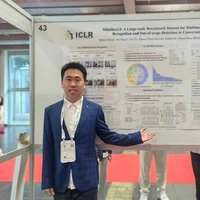
MIntRec2.0: A Large-scale Benchmark Dataset for Multimodal Intent Recognition and Out-of-scope Detection in Conversations

Multimodal intent recognition poses significant challenges, requiring the incorporation of non-verbal modalities from real-world contexts to enhance the comprehension of human intentions. Existing benchmark datasets are limited in scale and suffer from difficulties in handling out-of-scope samples that arise in multi-turn conversational interactions. We introduce MIntRec2.0, a large-scale benchmark dataset for multimodal intent recognition in multi-party conversations. It contains 1,245 dialogues with 15,040 samples, each annotated within a new intent taxonomy of 30 fine-grained classes. Besides 9,304 in-scope samples, it also includes 5,736 out-of-scope samples appearing in multi-turn contexts, which naturally occur in real-world scenarios. Furthermore, we provide comprehensive information on the speakers in each utterance, enriching its utility for multi-party conversational research. We establish a general framework supporting the organization of single-turn and multi-turn dialogue data, modality feature extraction, multimodal fusion, as well as in-scope classification and out-of-scope detection. Evaluation benchmarks are built using classic multimodal fusion methods, ChatGPT, and human evaluators. While existing methods incorporating nonverbal information yield improvements, effectively leveraging context information and detecting out-of-scope samples remains a substantial challenge. Notably, large language models exhibit a significant performance gap compared to humans, highlighting the limitations of machine learning methods in the cognitive intent understanding task. We believe that MIntRec2.0 will serve as a valuable resource, providing a pioneering foundation for research in human-machine conversational interactions, and significantly facilitating related applications. The full dataset and codes are available at https://github.com/thuiar/MIntRec2.0.

  • 9 authors
·
Mar 16, 2024

Exploring the Effectiveness of Instruction Tuning in Biomedical Language Processing

Large Language Models (LLMs), particularly those similar to ChatGPT, have significantly influenced the field of Natural Language Processing (NLP). While these models excel in general language tasks, their performance in domain-specific downstream tasks such as biomedical and clinical Named Entity Recognition (NER), Relation Extraction (RE), and Medical Natural Language Inference (NLI) is still evolving. In this context, our study investigates the potential of instruction tuning for biomedical language processing, applying this technique to two general LLMs of substantial scale. We present a comprehensive, instruction-based model trained on a dataset that consists of approximately 200,000 instruction-focused samples. This dataset represents a carefully curated compilation of existing data, meticulously adapted and reformatted to align with the specific requirements of our instruction-based tasks. This initiative represents an important step in utilising such models to achieve results on par with specialised encoder-only models like BioBERT and BioClinicalBERT for various classical biomedical NLP tasks. Our work includes an analysis of the dataset's composition and its impact on model performance, providing insights into the intricacies of instruction tuning. By sharing our codes, models, and the distinctively assembled instruction-based dataset, we seek to encourage ongoing research and development in this area.

  • 3 authors
·
Dec 31, 2023

MuMiN: A Large-Scale Multilingual Multimodal Fact-Checked Misinformation Social Network Dataset

Misinformation is becoming increasingly prevalent on social media and in news articles. It has become so widespread that we require algorithmic assistance utilising machine learning to detect such content. Training these machine learning models require datasets of sufficient scale, diversity and quality. However, datasets in the field of automatic misinformation detection are predominantly monolingual, include a limited amount of modalities and are not of sufficient scale and quality. Addressing this, we develop a data collection and linking system (MuMiN-trawl), to build a public misinformation graph dataset (MuMiN), containing rich social media data (tweets, replies, users, images, articles, hashtags) spanning 21 million tweets belonging to 26 thousand Twitter threads, each of which have been semantically linked to 13 thousand fact-checked claims across dozens of topics, events and domains, in 41 different languages, spanning more than a decade. The dataset is made available as a heterogeneous graph via a Python package (mumin). We provide baseline results for two node classification tasks related to the veracity of a claim involving social media, and demonstrate that these are challenging tasks, with the highest macro-average F1-score being 62.55% and 61.45% for the two tasks, respectively. The MuMiN ecosystem is available at https://mumin-dataset.github.io/, including the data, documentation, tutorials and leaderboards.

  • 2 authors
·
Feb 23, 2022

UnifiedVisual: A Framework for Constructing Unified Vision-Language Datasets

Unified vision large language models (VLLMs) have recently achieved impressive advancements in both multimodal understanding and generation, powering applications such as visual question answering and text-guided image synthesis. However, progress in unified VLLMs remains constrained by the lack of datasets that fully exploit the synergistic potential between these two core abilities. Existing datasets typically address understanding and generation in isolation, thereby limiting the performance of unified VLLMs. To bridge this critical gap, we introduce a novel dataset construction framework, UnifiedVisual, and present UnifiedVisual-240K, a high-quality dataset meticulously designed to facilitate mutual enhancement between multimodal understanding and generation. UnifiedVisual-240K seamlessly integrates diverse visual and textual inputs and outputs, enabling comprehensive cross-modal reasoning and precise text-to-image alignment. Our dataset encompasses a wide spectrum of tasks and data sources, ensuring rich diversity and addressing key shortcomings of prior resources. Extensive experiments demonstrate that models trained on UnifiedVisual-240K consistently achieve strong performance across a wide range of tasks. Notably, these models exhibit significant mutual reinforcement between multimodal understanding and generation, further validating the effectiveness of our framework and dataset. We believe UnifiedVisual represents a new growth point for advancing unified VLLMs and unlocking their full potential. Our code and datasets is available at https://github.com/fnlp-vision/UnifiedVisual.

  • 10 authors
·
Sep 18

Towards Exploiting Background Knowledge for Building Conversation Systems

Existing dialog datasets contain a sequence of utterances and responses without any explicit background knowledge associated with them. This has resulted in the development of models which treat conversation as a sequence-to-sequence generation task i.e, given a sequence of utterances generate the response sequence). This is not only an overly simplistic view of conversation but it is also emphatically different from the way humans converse by heavily relying on their background knowledge about the topic (as opposed to simply relying on the previous sequence of utterances). For example, it is common for humans to (involuntarily) produce utterances which are copied or suitably modified from background articles they have read about the topic. To facilitate the development of such natural conversation models which mimic the human process of conversing, we create a new dataset containing movie chats wherein each response is explicitly generated by copying and/or modifying sentences from unstructured background knowledge such as plots, comments and reviews about the movie. We establish baseline results on this dataset (90K utterances from 9K conversations) using three different models: (i) pure generation based models which ignore the background knowledge (ii) generation based models which learn to copy information from the background knowledge when required and (iii) span prediction based models which predict the appropriate response span in the background knowledge.

  • 4 authors
·
Sep 21, 2018

TicketTalk: Toward human-level performance with end-to-end, transaction-based dialog systems

We present a data-driven, end-to-end approach to transaction-based dialog systems that performs at near-human levels in terms of verbal response quality and factual grounding accuracy. We show that two essential components of the system produce these results: a sufficiently large and diverse, in-domain labeled dataset, and a neural network-based, pre-trained model that generates both verbal responses and API call predictions. In terms of data, we introduce TicketTalk, a movie ticketing dialog dataset with 23,789 annotated conversations. The movie ticketing conversations range from completely open-ended and unrestricted to more structured, both in terms of their knowledge base, discourse features, and number of turns. In qualitative human evaluations, model-generated responses trained on just 10,000 TicketTalk dialogs were rated to "make sense" 86.5 percent of the time, almost the same as human responses in the same contexts. Our simple, API-focused annotation schema results in a much easier labeling task making it faster and more cost effective. It is also the key component for being able to predict API calls accurately. We handle factual grounding by incorporating API calls in the training data, allowing our model to learn which actions to take and when. Trained on the same 10,000-dialog set, the model's API call predictions were rated to be correct 93.9 percent of the time in our evaluations, surpassing the ratings for the corresponding human labels. We show how API prediction and response generation scores improve as the dataset size incrementally increases from 5000 to 21,000 dialogs. Our analysis also clearly illustrates the benefits of pre-training. We are publicly releasing the TicketTalk dataset with this paper to facilitate future work on transaction-based dialogs.

  • 4 authors
·
Dec 22, 2020

Facilitating Pornographic Text Detection for Open-Domain Dialogue Systems via Knowledge Distillation of Large Language Models

Pornographic content occurring in human-machine interaction dialogues can cause severe side effects for users in open-domain dialogue systems. However, research on detecting pornographic language within human-machine interaction dialogues is an important subject that is rarely studied. To advance in this direction, we introduce CensorChat, a dialogue monitoring dataset aimed at detecting whether the dialogue session contains pornographic content. To this end, we collect real-life human-machine interaction dialogues in the wild and break them down into single utterances and single-turn dialogues, with the last utterance spoken by the chatbot. We propose utilizing knowledge distillation of large language models to annotate the dataset. Specifically, first, the raw dataset is annotated by four open-source large language models, with the majority vote determining the label. Second, we use ChatGPT to update the empty label from the first step. Third, to ensure the quality of the validation and test sets, we utilize GPT-4 for label calibration. If the current label does not match the one generated by GPT-4, we employ a self-criticism strategy to verify its correctness. Finally, to facilitate the detection of pornographic text, we develop a series of text classifiers using a pseudo-labeled dataset. Detailed data analysis demonstrates that leveraging knowledge distillation techniques with large language models provides a practical and cost-efficient method for developing pornographic text detectors.

  • 5 authors
·
Mar 19, 2024