new
Get trending papers in your email inbox once a day!
Get trending papers in your email inbox!
Subscribe

LightStereo: Channel Boost Is All You Need for Efficient 2D Cost Aggregation
We present LightStereo, a cutting-edge stereo-matching network crafted to accelerate the matching process. Departing from conventional methodologies that rely on aggregating computationally intensive 4D costs, LightStereo adopts the 3D cost volume as a lightweight alternative. While similar approaches have been explored previously, our breakthrough lies in enhancing performance through a dedicated focus on the channel dimension of the 3D cost volume, where the distribution of matching costs is encapsulated. Our exhaustive exploration has yielded plenty of strategies to amplify the capacity of the pivotal dimension, ensuring both precision and efficiency. We compare the proposed LightStereo with existing state-of-the-art methods across various benchmarks, which demonstrate its superior performance in speed, accuracy, and resource utilization. LightStereo achieves a competitive EPE metric in the SceneFlow datasets while demanding a minimum of only 22 GFLOPs and 17 ms of runtime, and ranks 1st on KITTI 2015 among real-time models. Our comprehensive analysis reveals the effect of 2D cost aggregation for stereo matching, paving the way for real-world applications of efficient stereo systems. Code will be available at https://github.com/XiandaGuo/OpenStereo.
M${^2}$Depth: Self-supervised Two-Frame Multi-camera Metric Depth Estimation
This paper presents a novel self-supervised two-frame multi-camera metric depth estimation network, termed M{^2}Depth, which is designed to predict reliable scale-aware surrounding depth in autonomous driving. Unlike the previous works that use multi-view images from a single time-step or multiple time-step images from a single camera, M{^2}Depth takes temporally adjacent two-frame images from multiple cameras as inputs and produces high-quality surrounding depth. We first construct cost volumes in spatial and temporal domains individually and propose a spatial-temporal fusion module that integrates the spatial-temporal information to yield a strong volume presentation. We additionally combine the neural prior from SAM features with internal features to reduce the ambiguity between foreground and background and strengthen the depth edges. Extensive experimental results on nuScenes and DDAD benchmarks show M{^2}Depth achieves state-of-the-art performance. More results can be found in https://heiheishuang.xyz/M2Depth .

BoostMVSNeRFs: Boosting MVS-based NeRFs to Generalizable View Synthesis in Large-scale Scenes
While Neural Radiance Fields (NeRFs) have demonstrated exceptional quality, their protracted training duration remains a limitation. Generalizable and MVS-based NeRFs, although capable of mitigating training time, often incur tradeoffs in quality. This paper presents a novel approach called BoostMVSNeRFs to enhance the rendering quality of MVS-based NeRFs in large-scale scenes. We first identify limitations in MVS-based NeRF methods, such as restricted viewport coverage and artifacts due to limited input views. Then, we address these limitations by proposing a new method that selects and combines multiple cost volumes during volume rendering. Our method does not require training and can adapt to any MVS-based NeRF methods in a feed-forward fashion to improve rendering quality. Furthermore, our approach is also end-to-end trainable, allowing fine-tuning on specific scenes. We demonstrate the effectiveness of our method through experiments on large-scale datasets, showing significant rendering quality improvements in large-scale scenes and unbounded outdoor scenarios. We release the source code of BoostMVSNeRFs at https://su-terry.github.io/BoostMVSNeRFs/.


UFM: A Simple Path towards Unified Dense Correspondence with Flow
Dense image correspondence is central to many applications, such as visual odometry, 3D reconstruction, object association, and re-identification. Historically, dense correspondence has been tackled separately for wide-baseline scenarios and optical flow estimation, despite the common goal of matching content between two images. In this paper, we develop a Unified Flow & Matching model (UFM), which is trained on unified data for pixels that are co-visible in both source and target images. UFM uses a simple, generic transformer architecture that directly regresses the (u,v) flow. It is easier to train and more accurate for large flows compared to the typical coarse-to-fine cost volumes in prior work. UFM is 28% more accurate than state-of-the-art flow methods (Unimatch), while also having 62% less error and 6.7x faster than dense wide-baseline matchers (RoMa). UFM is the first to demonstrate that unified training can outperform specialized approaches across both domains. This result enables fast, general-purpose correspondence and opens new directions for multi-modal, long-range, and real-time correspondence tasks.

3D-Aware Vision-Language Models Fine-Tuning with Geometric Distillation
Vision-Language Models (VLMs) have shown remarkable performance on diverse visual and linguistic tasks, yet they remain fundamentally limited in their understanding of 3D spatial structures. We propose Geometric Distillation, a lightweight, annotation-free fine-tuning framework that injects human-inspired geometric cues into pretrained VLMs without modifying their architecture. By distilling (1) sparse correspondences, (2) relative depth relations, and (3) dense cost volumes from off-the-shelf 3D foundation models (e.g., MASt3R, VGGT), our method shapes representations to be geometry-aware while remaining compatible with natural image-text inputs. Through extensive evaluations on 3D vision-language reasoning and 3D perception benchmarks, our method consistently outperforms prior approaches, achieving improved 3D spatial reasoning with significantly lower computational cost. Our work demonstrates a scalable and efficient path to bridge 2D-trained VLMs with 3D understanding, opening up wider use in spatially grounded multimodal tasks.


TAPTR: Tracking Any Point with Transformers as Detection
In this paper, we propose a simple and strong framework for Tracking Any Point with TRansformers (TAPTR). Based on the observation that point tracking bears a great resemblance to object detection and tracking, we borrow designs from DETR-like algorithms to address the task of TAP. In the proposed framework, in each video frame, each tracking point is represented as a point query, which consists of a positional part and a content part. As in DETR, each query (its position and content feature) is naturally updated layer by layer. Its visibility is predicted by its updated content feature. Queries belonging to the same tracking point can exchange information through self-attention along the temporal dimension. As all such operations are well-designed in DETR-like algorithms, the model is conceptually very simple. We also adopt some useful designs such as cost volume from optical flow models and develop simple designs to provide long temporal information while mitigating the feature drifting issue. Our framework demonstrates strong performance with state-of-the-art performance on various TAP datasets with faster inference speed.


CVRecon: Rethinking 3D Geometric Feature Learning For Neural Reconstruction
Recent advances in neural reconstruction using posed image sequences have made remarkable progress. However, due to the lack of depth information, existing volumetric-based techniques simply duplicate 2D image features of the object surface along the entire camera ray. We contend this duplication introduces noise in empty and occluded spaces, posing challenges for producing high-quality 3D geometry. Drawing inspiration from traditional multi-view stereo methods, we propose an end-to-end 3D neural reconstruction framework CVRecon, designed to exploit the rich geometric embedding in the cost volumes to facilitate 3D geometric feature learning. Furthermore, we present Ray-contextual Compensated Cost Volume (RCCV), a novel 3D geometric feature representation that encodes view-dependent information with improved integrity and robustness. Through comprehensive experiments, we demonstrate that our approach significantly improves the reconstruction quality in various metrics and recovers clear fine details of the 3D geometries. Our extensive ablation studies provide insights into the development of effective 3D geometric feature learning schemes. Project page: https://cvrecon.ziyue.cool/
Generalized Binary Search Network for Highly-Efficient Multi-View Stereo
Multi-view Stereo (MVS) with known camera parameters is essentially a 1D search problem within a valid depth range. Recent deep learning-based MVS methods typically densely sample depth hypotheses in the depth range, and then construct prohibitively memory-consuming 3D cost volumes for depth prediction. Although coarse-to-fine sampling strategies alleviate this overhead issue to a certain extent, the efficiency of MVS is still an open challenge. In this work, we propose a novel method for highly efficient MVS that remarkably decreases the memory footprint, meanwhile clearly advancing state-of-the-art depth prediction performance. We investigate what a search strategy can be reasonably optimal for MVS taking into account of both efficiency and effectiveness. We first formulate MVS as a binary search problem, and accordingly propose a generalized binary search network for MVS. Specifically, in each step, the depth range is split into 2 bins with extra 1 error tolerance bin on both sides. A classification is performed to identify which bin contains the true depth. We also design three mechanisms to respectively handle classification errors, deal with out-of-range samples and decrease the training memory. The new formulation makes our method only sample a very small number of depth hypotheses in each step, which is highly memory efficient, and also greatly facilitates quick training convergence. Experiments on competitive benchmarks show that our method achieves state-of-the-art accuracy with much less memory. Particularly, our method obtains an overall score of 0.289 on DTU dataset and tops the first place on challenging Tanks and Temples advanced dataset among all the learning-based methods. The trained models and code will be released at https://github.com/MiZhenxing/GBi-Net.

PanSplat: 4K Panorama Synthesis with Feed-Forward Gaussian Splatting
With the advent of portable 360{\deg} cameras, panorama has gained significant attention in applications like virtual reality (VR), virtual tours, robotics, and autonomous driving. As a result, wide-baseline panorama view synthesis has emerged as a vital task, where high resolution, fast inference, and memory efficiency are essential. Nevertheless, existing methods are typically constrained to lower resolutions (512 times 1024) due to demanding memory and computational requirements. In this paper, we present PanSplat, a generalizable, feed-forward approach that efficiently supports resolution up to 4K (2048 times 4096). Our approach features a tailored spherical 3D Gaussian pyramid with a Fibonacci lattice arrangement, enhancing image quality while reducing information redundancy. To accommodate the demands of high resolution, we propose a pipeline that integrates a hierarchical spherical cost volume and Gaussian heads with local operations, enabling two-step deferred backpropagation for memory-efficient training on a single A100 GPU. Experiments demonstrate that PanSplat achieves state-of-the-art results with superior efficiency and image quality across both synthetic and real-world datasets. Code will be available at https://github.com/chengzhag/PanSplat.


Can-SAVE: Deploying Low-Cost and Population-Scale Cancer Screening via Survival Analysis Variables and EHR
Conventional medical cancer screening methods are costly, labor-intensive, and extremely difficult to scale. Although AI can improve cancer detection, most systems rely on complex or specialized medical data, making them impractical for large-scale screening. We introduce Can-SAVE, a lightweight AI system that ranks population-wide cancer risks solely based on medical history events. By integrating survival model outputs into a gradient-boosting framework, our approach detects subtle, long-term patient risk patterns - often well before clinical symptoms manifest. Can-SAVE was rigorously evaluated on a real-world dataset of 2.5 million adults spanning five Russian regions, marking the study as one of the largest and most comprehensive deployments of AI-driven cancer risk assessment. In a retrospective oncologist-supervised study over 1.9M patients, Can-SAVE achieves a 4-10x higher detection rate at identical screening volumes and an Average Precision (AP) of 0.228 vs. 0.193 for the best baseline (LoRA-tuned Qwen3-Embeddings via DeepSeek-R1 summarization). In a year-long prospective pilot (426K patients), our method almost doubled the cancer detection rate (+91%) and increased population coverage by 36% over the national screening protocol. The system demonstrates practical scalability: a city-wide population of 1 million patients can be processed in under three hours using standard hardware, enabling seamless clinical integration. This work proves that Can-SAVE achieves nationally significant cancer detection improvements while adhering to real-world public healthcare constraints, offering immediate clinical utility and a replicable framework for population-wide screening. Code for training and feature engineering is available at https://github.com/sb-ai-lab/Can-SAVE.
H-DenseUNet: Hybrid Densely Connected UNet for Liver and Tumor Segmentation from CT Volumes
Liver cancer is one of the leading causes of cancer death. To assist doctors in hepatocellular carcinoma diagnosis and treatment planning, an accurate and automatic liver and tumor segmentation method is highly demanded in the clinical practice. Recently, fully convolutional neural networks (FCNs), including 2D and 3D FCNs, serve as the back-bone in many volumetric image segmentation. However, 2D convolutions can not fully leverage the spatial information along the third dimension while 3D convolutions suffer from high computational cost and GPU memory consumption. To address these issues, we propose a novel hybrid densely connected UNet (H-DenseUNet), which consists of a 2D DenseUNet for efficiently extracting intra-slice features and a 3D counterpart for hierarchically aggregating volumetric contexts under the spirit of the auto-context algorithm for liver and tumor segmentation. We formulate the learning process of H-DenseUNet in an end-to-end manner, where the intra-slice representations and inter-slice features can be jointly optimized through a hybrid feature fusion (HFF) layer. We extensively evaluated our method on the dataset of MICCAI 2017 Liver Tumor Segmentation (LiTS) Challenge and 3DIRCADb Dataset. Our method outperformed other state-of-the-arts on the segmentation results of tumors and achieved very competitive performance for liver segmentation even with a single model.

Semi-Supervised Reward Modeling via Iterative Self-Training
Reward models (RM) capture the values and preferences of humans and play a central role in Reinforcement Learning with Human Feedback (RLHF) to align pretrained large language models (LLMs). Traditionally, training these models relies on extensive human-annotated preference data, which poses significant challenges in terms of scalability and cost. To overcome these limitations, we propose Semi-Supervised Reward Modeling (SSRM), an approach that enhances RM training using unlabeled data. Given an unlabeled dataset, SSRM involves three key iterative steps: pseudo-labeling unlabeled examples, selecting high-confidence examples through a confidence threshold, and supervised finetuning on the refined dataset. Across extensive experiments on various model configurations, we demonstrate that SSRM significantly improves reward models without incurring additional labeling costs. Notably, SSRM can achieve performance comparable to models trained entirely on labeled data of equivalent volumes. Overall, SSRM substantially reduces the dependency on large volumes of human-annotated data, thereby decreasing the overall cost and time involved in training effective reward models.

DPSeg: Dual-Prompt Cost Volume Learning for Open-Vocabulary Semantic Segmentation
Open-vocabulary semantic segmentation aims to segment images into distinct semantic regions for both seen and unseen categories at the pixel level. Current methods utilize text embeddings from pre-trained vision-language models like CLIP but struggle with the inherent domain gap between image and text embeddings, even after extensive alignment during training. Additionally, relying solely on deep text-aligned features limits shallow-level feature guidance, which is crucial for detecting small objects and fine details, ultimately reducing segmentation accuracy. To address these limitations, we propose a dual prompting framework, DPSeg, for this task. Our approach combines dual-prompt cost volume generation, a cost volume-guided decoder, and a semantic-guided prompt refinement strategy that leverages our dual prompting scheme to mitigate alignment issues in visual prompt generation. By incorporating visual embeddings from a visual prompt encoder, our approach reduces the domain gap between text and image embeddings while providing multi-level guidance through shallow features. Extensive experiments demonstrate that our method significantly outperforms existing state-of-the-art approaches on multiple public datasets.
Long-Term 3D Point Tracking By Cost Volume Fusion
Long-term point tracking is essential to understand non-rigid motion in the physical world better. Deep learning approaches have recently been incorporated into long-term point tracking, but most prior work predominantly functions in 2D. Although these methods benefit from the well-established backbones and matching frameworks, the motions they produce do not always make sense in the 3D physical world. In this paper, we propose the first deep learning framework for long-term point tracking in 3D that generalizes to new points and videos without requiring test-time fine-tuning. Our model contains a cost volume fusion module that effectively integrates multiple past appearances and motion information via a transformer architecture, significantly enhancing overall tracking performance. In terms of 3D tracking performance, our model significantly outperforms simple scene flow chaining and previous 2D point tracking methods, even if one uses ground truth depth and camera pose to backproject 2D point tracks in a synthetic scenario.
EDNet: Efficient Disparity Estimation with Cost Volume Combination and Attention-based Spatial Residual
Existing state-of-the-art disparity estimation works mostly leverage the 4D concatenation volume and construct a very deep 3D convolution neural network (CNN) for disparity regression, which is inefficient due to the high memory consumption and slow inference speed. In this paper, we propose a network named EDNet for efficient disparity estimation. Firstly, we construct a combined volume which incorporates contextual information from the squeezed concatenation volume and feature similarity measurement from the correlation volume. The combined volume can be next aggregated by 2D convolutions which are faster and require less memory than 3D convolutions. Secondly, we propose an attention-based spatial residual module to generate attention-aware residual features. The attention mechanism is applied to provide intuitive spatial evidence about inaccurate regions with the help of error maps at multiple scales and thus improve the residual learning efficiency. Extensive experiments on the Scene Flow and KITTI datasets show that EDNet outperforms the previous 3D CNN based works and achieves state-of-the-art performance with significantly faster speed and less memory consumption.

Decoupling Bidirectional Geometric Representations of 4D cost volume with 2D convolution
High-performance real-time stereo matching methods invariably rely on 3D regularization of the cost volume, which is unfriendly to mobile devices. And 2D regularization based methods struggle in ill-posed regions. In this paper, we present a deployment-friendly 4D cost aggregation network DBStereo, which is based on pure 2D convolutions. Specifically, we first provide a thorough analysis of the decoupling characteristics of 4D cost volume. And design a lightweight bidirectional geometry aggregation block to capture spatial and disparity representation respectively. Through decoupled learning, our approach achieves real-time performance and impressive accuracy simultaneously. Extensive experiments demonstrate that our proposed DBStereo outperforms all existing aggregation-based methods in both inference time and accuracy, even surpassing the iterative-based method IGEV-Stereo. Our study break the empirical design of using 3D convolutions for 4D cost volume and provides a simple yet strong baseline of the proposed decouple aggregation paradigm for further study. Code will be available at (https://github.com/happydummy/DBStereo{https://github.com/happydummy/DBStereo}) soon.
FusionDepth: Complement Self-Supervised Monocular Depth Estimation with Cost Volume
Multi-view stereo depth estimation based on cost volume usually works better than self-supervised monocular depth estimation except for moving objects and low-textured surfaces. So in this paper, we propose a multi-frame depth estimation framework which monocular depth can be refined continuously by multi-frame sequential constraints, leveraging a Bayesian fusion layer within several iterations. Both monocular and multi-view networks can be trained with no depth supervision. Our method also enhances the interpretability when combining monocular estimation with multi-view cost volume. Detailed experiments show that our method surpasses state-of-the-art unsupervised methods utilizing single or multiple frames at test time on KITTI benchmark.
ALOcc: Adaptive Lifting-based 3D Semantic Occupancy and Cost Volume-based Flow Prediction
Vision-based semantic occupancy and flow prediction plays a crucial role in providing spatiotemporal cues for real-world tasks, such as autonomous driving. Existing methods prioritize higher accuracy to cater to the demands of these tasks. In this work, we strive to improve performance by introducing a series of targeted improvements for 3D semantic occupancy prediction and flow estimation. First, we introduce an occlusion-aware adaptive lifting mechanism with a depth denoising technique to improve the robustness of 2D-to-3D feature transformation and reduce the reliance on depth priors. Second, we strengthen the semantic consistency between 3D features and their original 2D modalities by utilizing shared semantic prototypes to jointly constrain both 2D and 3D features. This is complemented by confidence- and category-based sampling strategies to tackle long-tail challenges in 3D space. To alleviate the feature encoding burden in the joint prediction of semantics and flow, we propose a BEV cost volume-based prediction method that links flow and semantic features through a cost volume and employs a classification-regression supervision scheme to address the varying flow scales in dynamic scenes. Our purely convolutional architecture framework, named ALOcc, achieves an optimal tradeoff between speed and accuracy achieving state-of-the-art results on multiple benchmarks. On Occ3D and training without the camera visible mask, our ALOcc achieves an absolute gain of 2.5\% in terms of RayIoU while operating at a comparable speed compared to the state-of-the-art, using the same input size (256times704) and ResNet-50 backbone. Our method also achieves 2nd place in the CVPR24 Occupancy and Flow Prediction Competition.
360SD-Net: 360° Stereo Depth Estimation with Learnable Cost Volume
Recently, end-to-end trainable deep neural networks have significantly improved stereo depth estimation for perspective images. However, 360{\deg} images captured under equirectangular projection cannot benefit from directly adopting existing methods due to distortion introduced (i.e., lines in 3D are not projected onto lines in 2D). To tackle this issue, we present a novel architecture specifically designed for spherical disparity using the setting of top-bottom 360{\deg} camera pairs. Moreover, we propose to mitigate the distortion issue by (1) an additional input branch capturing the position and relation of each pixel in the spherical coordinate, and (2) a cost volume built upon a learnable shifting filter. Due to the lack of 360{\deg} stereo data, we collect two 360{\deg} stereo datasets from Matterport3D and Stanford3D for training and evaluation. Extensive experiments and ablation study are provided to validate our method against existing algorithms. Finally, we show promising results on real-world environments capturing images with two consumer-level cameras.
CostFormer:Cost Transformer for Cost Aggregation in Multi-view Stereo
The core of Multi-view Stereo(MVS) is the matching process among reference and source pixels. Cost aggregation plays a significant role in this process, while previous methods focus on handling it via CNNs. This may inherit the natural limitation of CNNs that fail to discriminate repetitive or incorrect matches due to limited local receptive fields. To handle the issue, we aim to involve Transformer into cost aggregation. However, another problem may occur due to the quadratically growing computational complexity caused by Transformer, resulting in memory overflow and inference latency. In this paper, we overcome these limits with an efficient Transformer-based cost aggregation network, namely CostFormer. The Residual Depth-Aware Cost Transformer(RDACT) is proposed to aggregate long-range features on cost volume via self-attention mechanisms along the depth and spatial dimensions. Furthermore, Residual Regression Transformer(RRT) is proposed to enhance spatial attention. The proposed method is a universal plug-in to improve learning-based MVS methods.

Unifying Feature and Cost Aggregation with Transformers for Semantic and Visual Correspondence
This paper introduces a Transformer-based integrative feature and cost aggregation network designed for dense matching tasks. In the context of dense matching, many works benefit from one of two forms of aggregation: feature aggregation, which pertains to the alignment of similar features, or cost aggregation, a procedure aimed at instilling coherence in the flow estimates across neighboring pixels. In this work, we first show that feature aggregation and cost aggregation exhibit distinct characteristics and reveal the potential for substantial benefits stemming from the judicious use of both aggregation processes. We then introduce a simple yet effective architecture that harnesses self- and cross-attention mechanisms to show that our approach unifies feature aggregation and cost aggregation and effectively harnesses the strengths of both techniques. Within the proposed attention layers, the features and cost volume both complement each other, and the attention layers are interleaved through a coarse-to-fine design to further promote accurate correspondence estimation. Finally at inference, our network produces multi-scale predictions, computes their confidence scores, and selects the most confident flow for final prediction. Our framework is evaluated on standard benchmarks for semantic matching, and also applied to geometric matching, where we show that our approach achieves significant improvements compared to existing methods.

CAT-Seg: Cost Aggregation for Open-Vocabulary Semantic Segmentation
Open-vocabulary semantic segmentation presents the challenge of labeling each pixel within an image based on a wide range of text descriptions. In this work, we introduce a novel cost-based approach to adapt vision-language foundation models, notably CLIP, for the intricate task of semantic segmentation. Through aggregating the cosine similarity score, i.e., the cost volume between image and text embeddings, our method potently adapts CLIP for segmenting seen and unseen classes by fine-tuning its encoders, addressing the challenges faced by existing methods in handling unseen classes. Building upon this, we explore methods to effectively aggregate the cost volume considering its multi-modal nature of being established between image and text embeddings. Furthermore, we examine various methods for efficiently fine-tuning CLIP.

GoMVS: Geometrically Consistent Cost Aggregation for Multi-View Stereo
Matching cost aggregation plays a fundamental role in learning-based multi-view stereo networks. However, directly aggregating adjacent costs can lead to suboptimal results due to local geometric inconsistency. Related methods either seek selective aggregation or improve aggregated depth in the 2D space, both are unable to handle geometric inconsistency in the cost volume effectively. In this paper, we propose GoMVS to aggregate geometrically consistent costs, yielding better utilization of adjacent geometries. More specifically, we correspond and propagate adjacent costs to the reference pixel by leveraging the local geometric smoothness in conjunction with surface normals. We achieve this by the geometric consistent propagation (GCP) module. It computes the correspondence from the adjacent depth hypothesis space to the reference depth space using surface normals, then uses the correspondence to propagate adjacent costs to the reference geometry, followed by a convolution for aggregation. Our method achieves new state-of-the-art performance on DTU, Tanks & Temple, and ETH3D datasets. Notably, our method ranks 1st on the Tanks & Temple Advanced benchmark.

MVSplat: Efficient 3D Gaussian Splatting from Sparse Multi-View Images
We propose MVSplat, an efficient feed-forward 3D Gaussian Splatting model learned from sparse multi-view images. To accurately localize the Gaussian centers, we propose to build a cost volume representation via plane sweeping in the 3D space, where the cross-view feature similarities stored in the cost volume can provide valuable geometry cues to the estimation of depth. We learn the Gaussian primitives' opacities, covariances, and spherical harmonics coefficients jointly with the Gaussian centers while only relying on photometric supervision. We demonstrate the importance of the cost volume representation in learning feed-forward Gaussian Splatting models via extensive experimental evaluations. On the large-scale RealEstate10K and ACID benchmarks, our model achieves state-of-the-art performance with the fastest feed-forward inference speed (22 fps). Compared to the latest state-of-the-art method pixelSplat, our model uses 10times fewer parameters and infers more than 2times faster while providing higher appearance and geometry quality as well as better cross-dataset generalization.


ProDepth: Boosting Self-Supervised Multi-Frame Monocular Depth with Probabilistic Fusion
Self-supervised multi-frame monocular depth estimation relies on the geometric consistency between successive frames under the assumption of a static scene. However, the presence of moving objects in dynamic scenes introduces inevitable inconsistencies, causing misaligned multi-frame feature matching and misleading self-supervision during training. In this paper, we propose a novel framework called ProDepth, which effectively addresses the mismatch problem caused by dynamic objects using a probabilistic approach. We initially deduce the uncertainty associated with static scene assumption by adopting an auxiliary decoder. This decoder analyzes inconsistencies embedded in the cost volume, inferring the probability of areas being dynamic. We then directly rectify the erroneous cost volume for dynamic areas through a Probabilistic Cost Volume Modulation (PCVM) module. Specifically, we derive probability distributions of depth candidates from both single-frame and multi-frame cues, modulating the cost volume by adaptively fusing those distributions based on the inferred uncertainty. Additionally, we present a self-supervision loss reweighting strategy that not only masks out incorrect supervision with high uncertainty but also mitigates the risks in remaining possible dynamic areas in accordance with the probability. Our proposed method excels over state-of-the-art approaches in all metrics on both Cityscapes and KITTI datasets, and demonstrates superior generalization ability on the Waymo Open dataset.
Rectified Iterative Disparity for Stereo Matching
Both uncertainty-assisted and iteration-based methods have achieved great success in stereo matching. However, existing uncertainty estimation methods take a single image and the corresponding disparity as input, which imposes higher demands on the estimation network. In this paper, we propose Cost volume-based disparity Uncertainty Estimation (UEC). Based on the rich similarity information in the cost volume coming from the image pairs, the proposed UEC can achieve competitive performance with low computational cost. Secondly, we propose two methods of uncertainty-assisted disparity estimation, Uncertainty-based Disparity Rectification (UDR) and Uncertainty-based Disparity update Conditioning (UDC). These two methods optimise the disparity update process of the iterative-based approach without adding extra parameters. In addition, we propose Disparity Rectification loss that significantly improves the accuracy of small amount of disparity updates. We present a high-performance stereo architecture, DR Stereo, which is a combination of the proposed methods. Experimental results from SceneFlow, KITTI, Middlebury 2014, and ETH3D show that DR-Stereo achieves very competitive disparity estimation performance.
Pyramid Stereo Matching Network
Recent work has shown that depth estimation from a stereo pair of images can be formulated as a supervised learning task to be resolved with convolutional neural networks (CNNs). However, current architectures rely on patch-based Siamese networks, lacking the means to exploit context information for finding correspondence in illposed regions. To tackle this problem, we propose PSMNet, a pyramid stereo matching network consisting of two main modules: spatial pyramid pooling and 3D CNN. The spatial pyramid pooling module takes advantage of the capacity of global context information by aggregating context in different scales and locations to form a cost volume. The 3D CNN learns to regularize cost volume using stacked multiple hourglass networks in conjunction with intermediate supervision. The proposed approach was evaluated on several benchmark datasets. Our method ranked first in the KITTI 2012 and 2015 leaderboards before March 18, 2018. The codes of PSMNet are available at: https://github.com/JiaRenChang/PSMNet.
LoFTR: Detector-Free Local Feature Matching with Transformers
We present a novel method for local image feature matching. Instead of performing image feature detection, description, and matching sequentially, we propose to first establish pixel-wise dense matches at a coarse level and later refine the good matches at a fine level. In contrast to dense methods that use a cost volume to search correspondences, we use self and cross attention layers in Transformer to obtain feature descriptors that are conditioned on both images. The global receptive field provided by Transformer enables our method to produce dense matches in low-texture areas, where feature detectors usually struggle to produce repeatable interest points. The experiments on indoor and outdoor datasets show that LoFTR outperforms state-of-the-art methods by a large margin. LoFTR also ranks first on two public benchmarks of visual localization among the published methods.

TAPTRv2: Attention-based Position Update Improves Tracking Any Point
In this paper, we present TAPTRv2, a Transformer-based approach built upon TAPTR for solving the Tracking Any Point (TAP) task. TAPTR borrows designs from DEtection TRansformer (DETR) and formulates each tracking point as a point query, making it possible to leverage well-studied operations in DETR-like algorithms. TAPTRv2 improves TAPTR by addressing a critical issue regarding its reliance on cost-volume,which contaminates the point query\'s content feature and negatively impacts both visibility prediction and cost-volume computation. In TAPTRv2, we propose a novel attention-based position update (APU) operation and use key-aware deformable attention to realize. For each query, this operation uses key-aware attention weights to combine their corresponding deformable sampling positions to predict a new query position. This design is based on the observation that local attention is essentially the same as cost-volume, both of which are computed by dot-production between a query and its surrounding features. By introducing this new operation, TAPTRv2 not only removes the extra burden of cost-volume computation, but also leads to a substantial performance improvement. TAPTRv2 surpasses TAPTR and achieves state-of-the-art performance on many challenging datasets, demonstrating the superiority
A Renaissance of Explicit Motion Information Mining from Transformers for Action Recognition
Recently, action recognition has been dominated by transformer-based methods, thanks to their spatiotemporal contextual aggregation capacities. However, despite the significant progress achieved on scene-related datasets, they do not perform well on motion-sensitive datasets due to the lack of elaborate motion modeling designs. Meanwhile, we observe that the widely-used cost volume in traditional action recognition is highly similar to the affinity matrix defined in self-attention, but equipped with powerful motion modeling capacities. In light of this, we propose to integrate those effective motion modeling properties into the existing transformer in a unified and neat way, with the proposal of the Explicit Motion Information Mining module (EMIM). In EMIM, we propose to construct the desirable affinity matrix in a cost volume style, where the set of key candidate tokens is sampled from the query-based neighboring area in the next frame in a sliding-window manner. Then, the constructed affinity matrix is used to aggregate contextual information for appearance modeling and is converted into motion features for motion modeling as well. We validate the motion modeling capacities of our method on four widely-used datasets, and our method performs better than existing state-of-the-art approaches, especially on motion-sensitive datasets, i.e., Something-Something V1 & V2.
GMFlow: Learning Optical Flow via Global Matching
Learning-based optical flow estimation has been dominated with the pipeline of cost volume with convolutions for flow regression, which is inherently limited to local correlations and thus is hard to address the long-standing challenge of large displacements. To alleviate this, the state-of-the-art framework RAFT gradually improves its prediction quality by using a large number of iterative refinements, achieving remarkable performance but introducing linearly increasing inference time. To enable both high accuracy and efficiency, we completely revamp the dominant flow regression pipeline by reformulating optical flow as a global matching problem, which identifies the correspondences by directly comparing feature similarities. Specifically, we propose a GMFlow framework, which consists of three main components: a customized Transformer for feature enhancement, a correlation and softmax layer for global feature matching, and a self-attention layer for flow propagation. We further introduce a refinement step that reuses GMFlow at higher feature resolution for residual flow prediction. Our new framework outperforms 31-refinements RAFT on the challenging Sintel benchmark, while using only one refinement and running faster, suggesting a new paradigm for accurate and efficient optical flow estimation. Code is available at https://github.com/haofeixu/gmflow.
The Temporal Opportunist: Self-Supervised Multi-Frame Monocular Depth
Self-supervised monocular depth estimation networks are trained to predict scene depth using nearby frames as a supervision signal during training. However, for many applications, sequence information in the form of video frames is also available at test time. The vast majority of monocular networks do not make use of this extra signal, thus ignoring valuable information that could be used to improve the predicted depth. Those that do, either use computationally expensive test-time refinement techniques or off-the-shelf recurrent networks, which only indirectly make use of the geometric information that is inherently available. We propose ManyDepth, an adaptive approach to dense depth estimation that can make use of sequence information at test time, when it is available. Taking inspiration from multi-view stereo, we propose a deep end-to-end cost volume based approach that is trained using self-supervision only. We present a novel consistency loss that encourages the network to ignore the cost volume when it is deemed unreliable, e.g. in the case of moving objects, and an augmentation scheme to cope with static cameras. Our detailed experiments on both KITTI and Cityscapes show that we outperform all published self-supervised baselines, including those that use single or multiple frames at test time.
HITNet: Hierarchical Iterative Tile Refinement Network for Real-time Stereo Matching
This paper presents HITNet, a novel neural network architecture for real-time stereo matching. Contrary to many recent neural network approaches that operate on a full cost volume and rely on 3D convolutions, our approach does not explicitly build a volume and instead relies on a fast multi-resolution initialization step, differentiable 2D geometric propagation and warping mechanisms to infer disparity hypotheses. To achieve a high level of accuracy, our network not only geometrically reasons about disparities but also infers slanted plane hypotheses allowing to more accurately perform geometric warping and upsampling operations. Our architecture is inherently multi-resolution allowing the propagation of information across different levels. Multiple experiments prove the effectiveness of the proposed approach at a fraction of the computation required by state-of-the-art methods. At the time of writing, HITNet ranks 1st-3rd on all the metrics published on the ETH3D website for two view stereo, ranks 1st on most of the metrics among all the end-to-end learning approaches on Middlebury-v3, ranks 1st on the popular KITTI 2012 and 2015 benchmarks among the published methods faster than 100ms.
TAPTRv3: Spatial and Temporal Context Foster Robust Tracking of Any Point in Long Video
In this paper, we present TAPTRv3, which is built upon TAPTRv2 to improve its point tracking robustness in long videos. TAPTRv2 is a simple DETR-like framework that can accurately track any point in real-world videos without requiring cost-volume. TAPTRv3 improves TAPTRv2 by addressing its shortage in querying high quality features from long videos, where the target tracking points normally undergo increasing variation over time. In TAPTRv3, we propose to utilize both spatial and temporal context to bring better feature querying along the spatial and temporal dimensions for more robust tracking in long videos. For better spatial feature querying, we present Context-aware Cross-Attention (CCA), which leverages surrounding spatial context to enhance the quality of attention scores when querying image features. For better temporal feature querying, we introduce Visibility-aware Long-Temporal Attention (VLTA) to conduct temporal attention to all past frames while considering their corresponding visibilities, which effectively addresses the feature drifting problem in TAPTRv2 brought by its RNN-like long-temporal modeling. TAPTRv3 surpasses TAPTRv2 by a large margin on most of the challenging datasets and obtains state-of-the-art performance. Even when compared with methods trained with large-scale extra internal data, TAPTRv3 is still competitive.


MVSFormer++: Revealing the Devil in Transformer's Details for Multi-View Stereo
Recent advancements in learning-based Multi-View Stereo (MVS) methods have prominently featured transformer-based models with attention mechanisms. However, existing approaches have not thoroughly investigated the profound influence of transformers on different MVS modules, resulting in limited depth estimation capabilities. In this paper, we introduce MVSFormer++, a method that prudently maximizes the inherent characteristics of attention to enhance various components of the MVS pipeline. Formally, our approach involves infusing cross-view information into the pre-trained DINOv2 model to facilitate MVS learning. Furthermore, we employ different attention mechanisms for the feature encoder and cost volume regularization, focusing on feature and spatial aggregations respectively. Additionally, we uncover that some design details would substantially impact the performance of transformer modules in MVS, including normalized 3D positional encoding, adaptive attention scaling, and the position of layer normalization. Comprehensive experiments on DTU, Tanks-and-Temples, BlendedMVS, and ETH3D validate the effectiveness of the proposed method. Notably, MVSFormer++ achieves state-of-the-art performance on the challenging DTU and Tanks-and-Temples benchmarks.
Uncertainty Guided Adaptive Warping for Robust and Efficient Stereo Matching
Correlation based stereo matching has achieved outstanding performance, which pursues cost volume between two feature maps. Unfortunately, current methods with a fixed model do not work uniformly well across various datasets, greatly limiting their real-world applicability. To tackle this issue, this paper proposes a new perspective to dynamically calculate correlation for robust stereo matching. A novel Uncertainty Guided Adaptive Correlation (UGAC) module is introduced to robustly adapt the same model for different scenarios. Specifically, a variance-based uncertainty estimation is employed to adaptively adjust the sampling area during warping operation. Additionally, we improve the traditional non-parametric warping with learnable parameters, such that the position-specific weights can be learned. We show that by empowering the recurrent network with the UGAC module, stereo matching can be exploited more robustly and effectively. Extensive experiments demonstrate that our method achieves state-of-the-art performance over the ETH3D, KITTI, and Middlebury datasets when employing the same fixed model over these datasets without any retraining procedure. To target real-time applications, we further design a lightweight model based on UGAC, which also outperforms other methods over KITTI benchmarks with only 0.6 M parameters.
360Recon: An Accurate Reconstruction Method Based on Depth Fusion from 360 Images
360-degree images offer a significantly wider field of view compared to traditional pinhole cameras, enabling sparse sampling and dense 3D reconstruction in low-texture environments. This makes them crucial for applications in VR, AR, and related fields. However, the inherent distortion caused by the wide field of view affects feature extraction and matching, leading to geometric consistency issues in subsequent multi-view reconstruction. In this work, we propose 360Recon, an innovative MVS algorithm for ERP images. The proposed spherical feature extraction module effectively mitigates distortion effects, and by combining the constructed 3D cost volume with multi-scale enhanced features from ERP images, our approach achieves high-precision scene reconstruction while preserving local geometric consistency. Experimental results demonstrate that 360Recon achieves state-of-the-art performance and high efficiency in depth estimation and 3D reconstruction on existing public panoramic reconstruction datasets.
GeoDream: Disentangling 2D and Geometric Priors for High-Fidelity and Consistent 3D Generation
Text-to-3D generation by distilling pretrained large-scale text-to-image diffusion models has shown great promise but still suffers from inconsistent 3D geometric structures (Janus problems) and severe artifacts. The aforementioned problems mainly stem from 2D diffusion models lacking 3D awareness during the lifting. In this work, we present GeoDream, a novel method that incorporates explicit generalized 3D priors with 2D diffusion priors to enhance the capability of obtaining unambiguous 3D consistent geometric structures without sacrificing diversity or fidelity. Specifically, we first utilize a multi-view diffusion model to generate posed images and then construct cost volume from the predicted image, which serves as native 3D geometric priors, ensuring spatial consistency in 3D space. Subsequently, we further propose to harness 3D geometric priors to unlock the great potential of 3D awareness in 2D diffusion priors via a disentangled design. Notably, disentangling 2D and 3D priors allows us to refine 3D geometric priors further. We justify that the refined 3D geometric priors aid in the 3D-aware capability of 2D diffusion priors, which in turn provides superior guidance for the refinement of 3D geometric priors. Our numerical and visual comparisons demonstrate that GeoDream generates more 3D consistent textured meshes with high-resolution realistic renderings (i.e., 1024 times 1024) and adheres more closely to semantic coherence.

FoundationStereo: Zero-Shot Stereo Matching
Tremendous progress has been made in deep stereo matching to excel on benchmark datasets through per-domain fine-tuning. However, achieving strong zero-shot generalization - a hallmark of foundation models in other computer vision tasks - remains challenging for stereo matching. We introduce FoundationStereo, a foundation model for stereo depth estimation designed to achieve strong zero-shot generalization. To this end, we first construct a large-scale (1M stereo pairs) synthetic training dataset featuring large diversity and high photorealism, followed by an automatic self-curation pipeline to remove ambiguous samples. We then design a number of network architecture components to enhance scalability, including a side-tuning feature backbone that adapts rich monocular priors from vision foundation models to mitigate the sim-to-real gap, and long-range context reasoning for effective cost volume filtering. Together, these components lead to strong robustness and accuracy across domains, establishing a new standard in zero-shot stereo depth estimation. Project page: https://nvlabs.github.io/FoundationStereo/
SemanticSplat: Feed-Forward 3D Scene Understanding with Language-Aware Gaussian Fields
Holistic 3D scene understanding, which jointly models geometry, appearance, and semantics, is crucial for applications like augmented reality and robotic interaction. Existing feed-forward 3D scene understanding methods (e.g., LSM) are limited to extracting language-based semantics from scenes, failing to achieve holistic scene comprehension. Additionally, they suffer from low-quality geometry reconstruction and noisy artifacts. In contrast, per-scene optimization methods rely on dense input views, which reduces practicality and increases complexity during deployment. In this paper, we propose SemanticSplat, a feed-forward semantic-aware 3D reconstruction method, which unifies 3D Gaussians with latent semantic attributes for joint geometry-appearance-semantics modeling. To predict the semantic anisotropic Gaussians, SemanticSplat fuses diverse feature fields (e.g., LSeg, SAM) with a cost volume representation that stores cross-view feature similarities, enhancing coherent and accurate scene comprehension. Leveraging a two-stage distillation framework, SemanticSplat reconstructs a holistic multi-modal semantic feature field from sparse-view images. Experiments demonstrate the effectiveness of our method for 3D scene understanding tasks like promptable and open-vocabulary segmentation. Video results are available at https://semanticsplat.github.io.
RomniStereo: Recurrent Omnidirectional Stereo Matching
Omnidirectional stereo matching (OSM) is an essential and reliable means for 360^{circ} depth sensing. However, following earlier works on conventional stereo matching, prior state-of-the-art (SOTA) methods rely on a 3D encoder-decoder block to regularize the cost volume, causing the whole system complicated and sub-optimal results. Recently, the Recurrent All-pairs Field Transforms (RAFT) based approach employs the recurrent update in 2D and has efficiently improved image-matching tasks, ie, optical flow, and stereo matching. To bridge the gap between OSM and RAFT, we mainly propose an opposite adaptive weighting scheme to seamlessly transform the outputs of spherical sweeping of OSM into the required inputs for the recurrent update, thus creating a recurrent omnidirectional stereo matching (RomniStereo) algorithm. Furthermore, we introduce two techniques, ie, grid embedding and adaptive context feature generation, which also contribute to RomniStereo's performance. Our best model improves the average MAE metric by 40.7\% over the previous SOTA baseline across five datasets. When visualizing the results, our models demonstrate clear advantages on both synthetic and realistic examples. The code is available at https://github.com/HalleyJiang/RomniStereo.
DELFlow: Dense Efficient Learning of Scene Flow for Large-Scale Point Clouds
Point clouds are naturally sparse, while image pixels are dense. The inconsistency limits feature fusion from both modalities for point-wise scene flow estimation. Previous methods rarely predict scene flow from the entire point clouds of the scene with one-time inference due to the memory inefficiency and heavy overhead from distance calculation and sorting involved in commonly used farthest point sampling, KNN, and ball query algorithms for local feature aggregation. To mitigate these issues in scene flow learning, we regularize raw points to a dense format by storing 3D coordinates in 2D grids. Unlike the sampling operation commonly used in existing works, the dense 2D representation 1) preserves most points in the given scene, 2) brings in a significant boost of efficiency, and 3) eliminates the density gap between points and pixels, allowing us to perform effective feature fusion. We also present a novel warping projection technique to alleviate the information loss problem resulting from the fact that multiple points could be mapped into one grid during projection when computing cost volume. Sufficient experiments demonstrate the efficiency and effectiveness of our method, outperforming the prior-arts on the FlyingThings3D and KITTI dataset.

ELFNet: Evidential Local-global Fusion for Stereo Matching
Although existing stereo matching models have achieved continuous improvement, they often face issues related to trustworthiness due to the absence of uncertainty estimation. Additionally, effectively leveraging multi-scale and multi-view knowledge of stereo pairs remains unexplored. In this paper, we introduce the Evidential Local-global Fusion (ELF) framework for stereo matching, which endows both uncertainty estimation and confidence-aware fusion with trustworthy heads. Instead of predicting the disparity map alone, our model estimates an evidential-based disparity considering both aleatoric and epistemic uncertainties. With the normal inverse-Gamma distribution as a bridge, the proposed framework realizes intra evidential fusion of multi-level predictions and inter evidential fusion between cost-volume-based and transformer-based stereo matching. Extensive experimental results show that the proposed framework exploits multi-view information effectively and achieves state-of-the-art overall performance both on accuracy and cross-domain generalization. The codes are available at https://github.com/jimmy19991222/ELFNet.
MAMo: Leveraging Memory and Attention for Monocular Video Depth Estimation
We propose MAMo, a novel memory and attention frame-work for monocular video depth estimation. MAMo can augment and improve any single-image depth estimation networks into video depth estimation models, enabling them to take advantage of the temporal information to predict more accurate depth. In MAMo, we augment model with memory which aids the depth prediction as the model streams through the video. Specifically, the memory stores learned visual and displacement tokens of the previous time instances. This allows the depth network to cross-reference relevant features from the past when predicting depth on the current frame. We introduce a novel scheme to continuously update the memory, optimizing it to keep tokens that correspond with both the past and the present visual information. We adopt attention-based approach to process memory features where we first learn the spatio-temporal relation among the resultant visual and displacement memory tokens using self-attention module. Further, the output features of self-attention are aggregated with the current visual features through cross-attention. The cross-attended features are finally given to a decoder to predict depth on the current frame. Through extensive experiments on several benchmarks, including KITTI, NYU-Depth V2, and DDAD, we show that MAMo consistently improves monocular depth estimation networks and sets new state-of-the-art (SOTA) accuracy. Notably, our MAMo video depth estimation provides higher accuracy with lower latency, when omparing to SOTA cost-volume-based video depth models.
PatchmatchNet: Learned Multi-View Patchmatch Stereo
We present PatchmatchNet, a novel and learnable cascade formulation of Patchmatch for high-resolution multi-view stereo. With high computation speed and low memory requirement, PatchmatchNet can process higher resolution imagery and is more suited to run on resource limited devices than competitors that employ 3D cost volume regularization. For the first time we introduce an iterative multi-scale Patchmatch in an end-to-end trainable architecture and improve the Patchmatch core algorithm with a novel and learned adaptive propagation and evaluation scheme for each iteration. Extensive experiments show a very competitive performance and generalization for our method on DTU, Tanks & Temples and ETH3D, but at a significantly higher efficiency than all existing top-performing models: at least two and a half times faster than state-of-the-art methods with twice less memory usage.

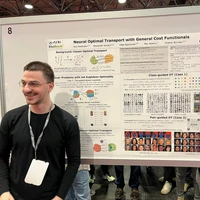
Neural Optimal Transport with General Cost Functionals
We introduce a novel neural network-based algorithm to compute optimal transport (OT) plans for general cost functionals. In contrast to common Euclidean costs, i.e., ell^1 or ell^2, such functionals provide more flexibility and allow using auxiliary information, such as class labels, to construct the required transport map. Existing methods for general costs are discrete and have limitations in practice, i.e. they do not provide an out-of-sample estimation. We address the challenge of designing a continuous OT approach for general costs that generalizes to new data points in high-dimensional spaces, such as images. Additionally, we provide the theoretical error analysis for our recovered transport plans. As an application, we construct a cost functional to map data distributions while preserving the class-wise structure.